
Scribe Winery Is Almost 20. They're Just Getting Started.
Scribe co-founder Adam Mariani on farming with sheep, reviving forgotten grapes, and why the wine industry's rough patch might be exactly what it needs.

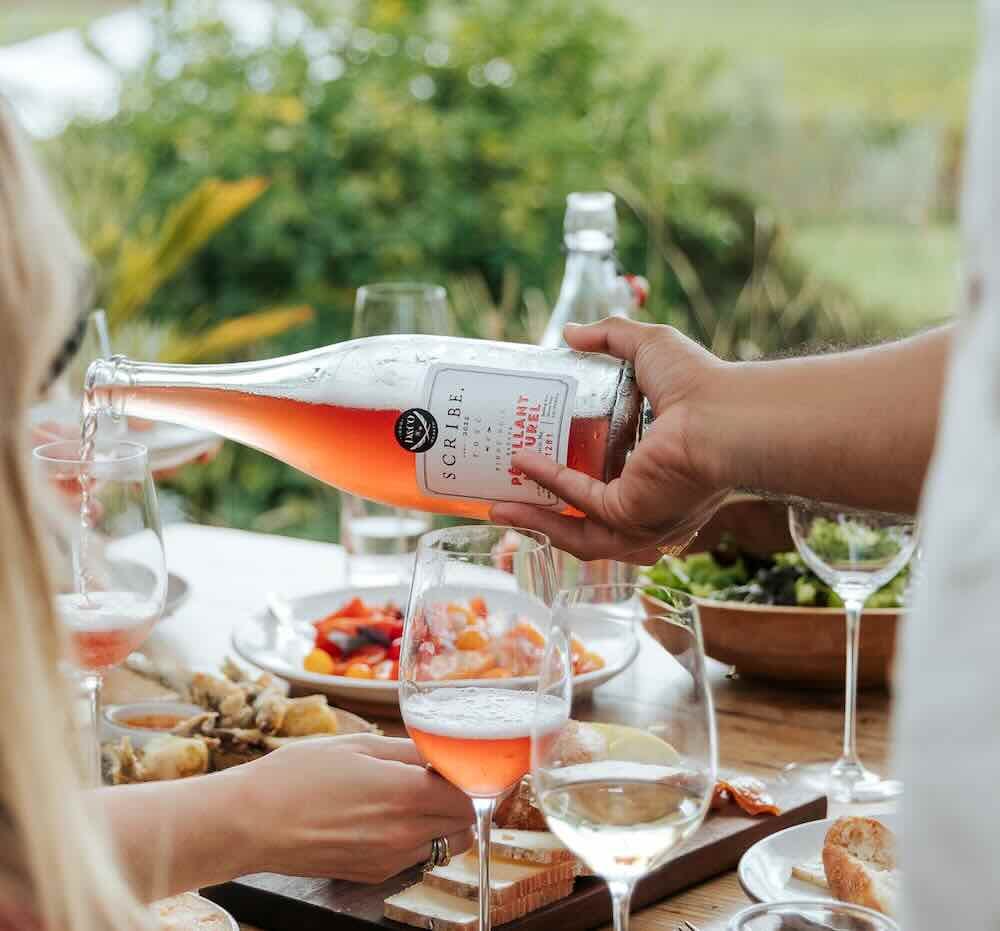
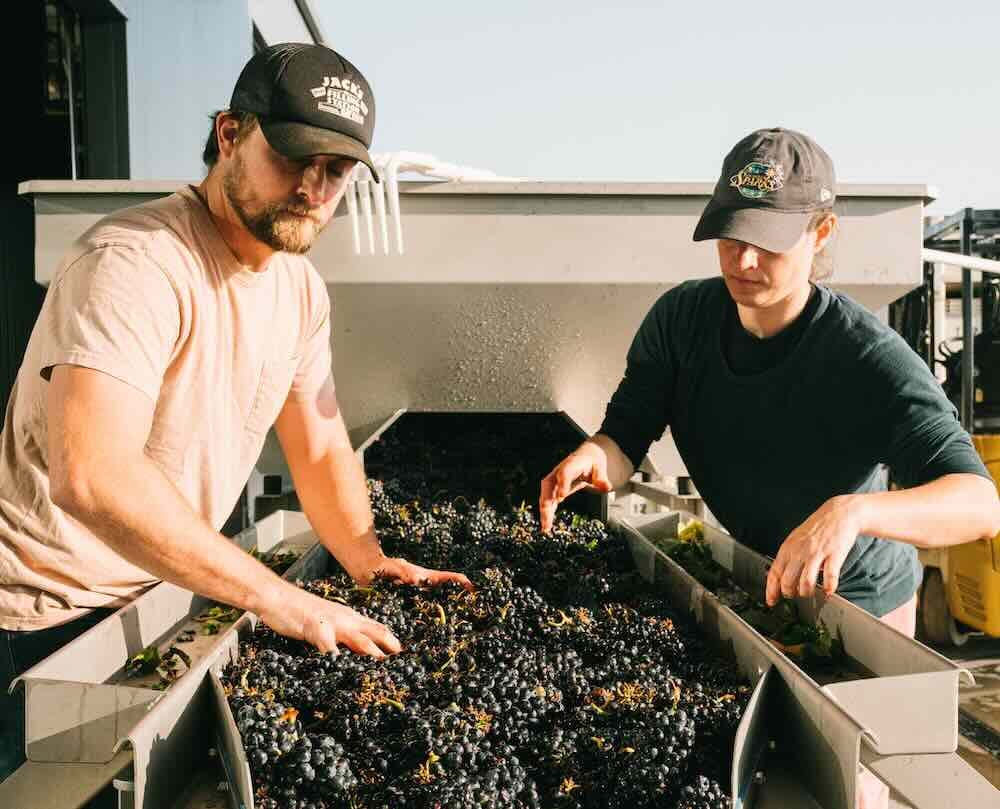
There’s something special about gathering with your team after a hard day’s work, especially during harvest season at a winery. You spend the day cutting clusters of grapes off the vines, transporting them to the winery, maybe sorting and starting to crush. All the while sweating, bonding, laughing, and working your ass off. So when the day ends, you want something to toast to your hard work. Sure, some may pass around super cold bottles of farmhouse ale or a session beer, but at Scribe Winery, they made a wine created just for this moment: rosé of pinot noir pétillant naturel.
Inspired by the rustic rosés made by Domaine Tempier in France’s Mediterranean Bandol region, this wine is incredibly fresh, lightly sparkling, and salmon pink with watermelon, strawberry, and guava notes. And while I haven’t just completed a day harvesting grapes, this is what I am sipping with Scribe partner and winemaker Adam Mariani backstage at Resy’s Love on the Line event at Fairlie in Chicago’s Kinzie Industrial Corridor.
“It’s almost a slight inspiration from Belgian saisons, where it’s kind of the more casual, simple, primary fermentation sparkling wine that tries to capture the beauty of the fermentation,” Mariani told me as we sat with a plate of baked oysters from Chicago’s All Together Now. “There’s not much else in the world that smells or tastes as good as fermenting rosé. Capturing that in a pét-nat was something we couldn’t resist doing. We made it just so we could drink it with the cellar team after harvest — and it became kind of a staple.”
It’s capturing moments like that that has helped build Scribe’s cult-like following over the last 20 years since Adam and his brother, Andrew, founded the winery in their early 20s on a craggy piece of land in southern Sonoma county. It’s here where the cool winds of the Petaluma Gap and San Pablo Bay meet to help winemakers craft some incredible wines.
Adam is in town pouring Scribe’s wines — the 2025 pét-nat rosé, a waxy citrusy 2024 sylvaner, and a fruit-forward silky 2023 estate-grown pinot noir — at the two-day five-session event that brought people together in a low-lit, sexy room around a custom-built 25-seat counter and lounge. The wines were paired with dishes from Galit (shipka banana peppers with Blakesville Creamery chevre), All Together Now (baked oysters with salted cherry blossom aioli) and Dimmi Dimmi (Italian beef-style carpaccio with giardineira).
This scene at Fairlie somewhat complements how the Marianis — including sister Kelly, Scribe’s culinary director who spent time cooking in Italy and the famed Chez Panisse — host friends and guests at the winery, which they have done since its earliest days.
From walnuts to a historic vineyard
The Marianis didn’t come to wine through the usual channels. No viticulture and enology degree from UC Davis. No family winery. No extensive experience working harvest year after year learning the craft and trade. What they had was four generations of California farming in their blood and a desire to do something a bit different.
Their family emigrated from Croatia more than a century ago and built a life growing almonds, walnuts, apricots, and prunes in California’s more rural, agrarian Central Valley about an hour northeast of Scribe’s home. Sure, they knew about the wineries in Sonoma and Napa — “the fancy neighbors over the hill,” as Adam and I joked — but it seemed like a world away from their more rural upbringing. So when you’re 21 and 23 and looking for something new to do, what those fancy neighbors were doing started to look pretty interesting.
To feed that interest, both brothers worked wine harvests in Europe — Andrew traveling through Greece and Spain; Adam working in France’s Côte-Rôtie area of the Rhone Valley. Back in California, seeking to start a winery, Andrew stumbled onto a property just outside the town of Sonoma: a defunct, slightly wild 255-acre former turkey farm (which at one point in its history reportedly housed a brothel, of course) on a volcanic hillside in the southern Sonoma Valley. The land happened to sit on what was once one of California’s most historically significant wine estates.
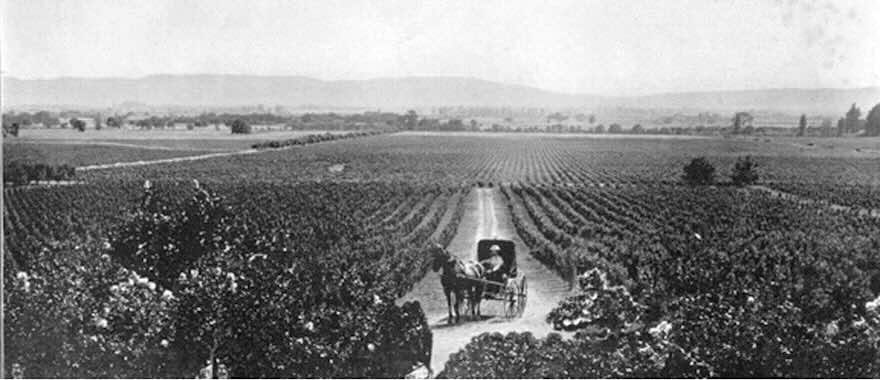
In the 1850s, German immigrants—the Dresels, the Bundschus, the Gundlachs, among others (do they sound familiar?) — arrived in Sonoma carrying vine cuttings from back home in Geisenheim. They planted riesling, sylvaner, traminer, and spätburgunder on what they called the Rhinefarm. These were the first European wine varietals to be planted in California, Adam said, and the Rhinefarm, he added, is essentially where the California wine industry was born.
The Dresels didn’t survive Prohibition. The farm cycled through other agricultural uses and eventually fell into disrepair. Gundlach-Bundschu now sits on a neighboring vineyard and is run descendants of the original founders. Nobody made wine on this part of Rhinefarm land for nearly a century, until the Mariani brothers showed up in 2007.
“Everything we do is inspired by the place and the history of the place,” Adam said. “One of the reasons why we named it Scribe is just trying to transcribe that terroir through the wines.”
One acre of sylvaner and a whole lot of faith
It would seem natural to first plant what grows successfully in this area of Sonoma: pinot noir and chardonnay. But remember, the Mariani brothers were spirited young guys looking to create something fresh, while borrowing from the past.
That first year, Andrew and Adam paid homage to the original German grapes that grew so successfully 150 years earlier. They planted an acre of sylvaner knowing how rebellious it may have been.
“Andrew and I were talking, and we said to each other, this is so crazy,” Adam said, laughing at the memory. “We can’t believe we’re planting an acre of sylvaner. Nobody does that. How do you even grow it?”
Yet a few years later, once the vines came into production, they had the exact same conversation, but flipped.
“I can’t believe we only planted one acre of sylvaner,” Adam said with a grin, realizing how well it performed from that first vintage and beyond. “It’s just so delicious. It’s very mineral and waxy and spicy and smells of saffron and white cracked pepper. We see why they planted it in the 1850s.”
Today, Scribe’s portfolio is anchored by estate-grown pinot and chard — even a skin-contact chard — along with riesling and sylvaner as tributes to the property’s German roots. They also produce cabernet sauvignon, sourced from nearby Atlas Peak and Monte Rosso vineyards, plus syrah and, in a particularly inspired move, mission, California’s original grape. More on that in a minute.
Building a cult following, one pizza party at a time
Scribe didn’t become a cult winery overnight, but it didn’t take long either. Their first vintage was only a couple hundred cases (they now produce around 10,000 annually). They didn’t build a tasting room or plant an entire vineyard at once. Instead, they let people follow along: visit in January and see one thing, come back in July and see progress. It was an open-source work in progress and that transparency became magnetic.
“I think some people found this revival project of a historic winery through our lens was refreshing,” Adam said. “It wasn’t a big, shiny, complete winery package. It was a project that people could follow along with us and join that journey.”
It didn’t hurt that they were young and had chef friends in San Francisco who were eager to drive an hour to cook at a vineyard with a pizza oven and bottomless wine. They exuded the kind of effortless, agrarian cool with a chic aesthetic that resonated with a generation of drinkers looking for something more authentic.
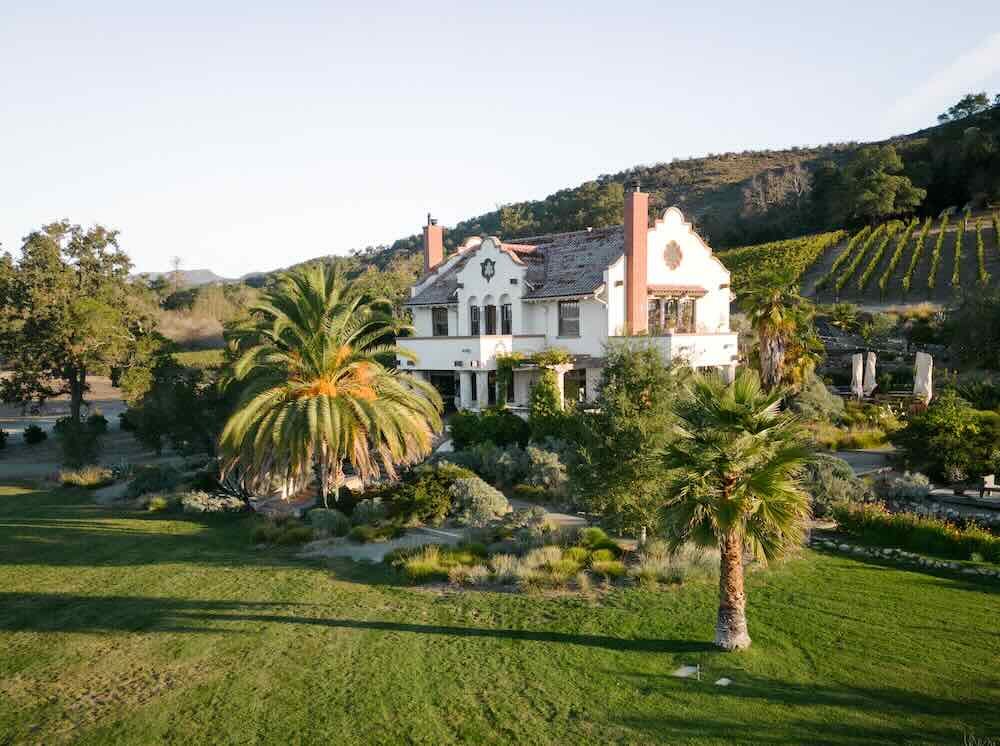
They eventually restored the 100-year-old Spanish-style hacienda, a signature of the property, where they would host tastings and dinners. It gained an understated buzz, becoming the destination for Bay Area millennials in the early 2010s, as recently stated by now-former San Francisco Chronicle senior wine critic Esther Mobley, who called Scribe, “the ultimate cool-kids winery.”
Today, visits to the Scribe estate are reserved for members of the Scribe Viticultural Society, a policy that started during COVID and stuck. These jaunts let guests experience the hacienda grounds with tastes of at least three current releases alongside seasonal weekly changing snacks, often using ingredients Kelly sources from their garden.
The SVS itself is a nod to history. It’s a modern take on the Buena Vista Viticultural Society, a wine club established by founding father Emil Dresel in 1858 — although modern day Buena Vista Winery credits Count Agoston Haraszthy starting it in 1863. Either way it’s a pretty cool way to give members something exclusive, and it’s open to all.
“Anybody can be in the Scribe Viticultural Society,” Adam was quick to point out. “We always prided ourselves on being accessible and approachable.”
Serving as stewards to the land
The Marianis farm organically and biodynamically, not for the certification, but because when your family has been farming for over a century, sustainability isn’t a buzzword. It’s survival.
In practice, that means insectaries around the property, French plum trees that harbor wasps whose larvae kill mealybugs (”not a delicious story,” Adam admitted), a thousand sheep grazing the vineyards for ground management and weed control in lieu of herbicides, and 150 acres held in conservation easement that he called forever wild.
“If your goal is to make honest, transparent, lively, energetic wines, then you have to have a lively, thriving vineyard ecosystem,” Adam said. “You need to keep the full ecosystem thriving to be able to do that.”
The return of the mission grape and Arrowhead Vineyard
About a decade ago, the brothers decided to plant mission, the grape the Spanish missionaries brought to California centuries ago, and one that virtually no one had grown commercially for 150-plus years.
The inspiration? They found tasting notes from a world’s fair in the 1860s where wines from their farm had been judged: the 1862 riesling, the 1865 spätburgunder, and the mission. The scores, especially for the Mission wine, were surprisingly high.
“We thought, nobody’s planted mission in maybe 150 to 200 years,” Adam said. “Let’s see what it can do with modern viticultural knowledge and cellar practices.”
The result is a beautifully dynamic wine that’s light like pinot noir, but with gravelly tannins and a rustic, esoteric character. It has light fruit tones with dried floral and potpourri notes.
“It’s this combination of a light, lively, chillable red, but also this very rustic, esoteric edge to it.”
With the sylvaner and now mission grapes, Scribe continues to revisit the past. And they just made a move to bring things even more full circle: They acquired the neighboring Arrowhead Vineyard to further reunite the original Rhinefarm dating back to the 1850s. In doing so, they added 150 additional acres to their holdings, 100 of which are planted with pinot noir and cabernet sauvignon.
In that Chronicle piece, Andrew Mariani told Mobley they plan to plant more chardonnay and possibly even kerner and Swiss white grape chasselas, both of which were once planted on those slopes. With this acquisition, all of Scribe’s pinot and chard is now 100% estate grown.
“It’s a beautiful, 30% sloped terrace hillside on the volcanic hill right next to us,” Adam said. “So we get to farm that and make wine from that now.”
For a winery approaching its 20th anniversary, it feels like the beginning of a very exciting next chapter.
Of course, expanding during a time when the California wine industry grapples with declining consumption, winery closures, and economic headwinds is a bold move. Adam sees the current moment as a correction — and corrections, he argued, can be good. They force people to be more creative and thoughtful.
“Wine is an avenue to connect individuals, to get people to sit down at a table or across a bar from each other and have a conversation,” he said. “In a world where we’re more connected and busier than ever, having this delicious avenue to connect and relate with the natural world will become more important and more desired than it’s ever been before.”
Want to hear the full conversation? Paid subscribers will get access to my uncut audio interview with Adam later this week, including the food, the interruptions from chefs, and everything that didn’t make it into this piece.
SG list: Things I’m high fiving this week
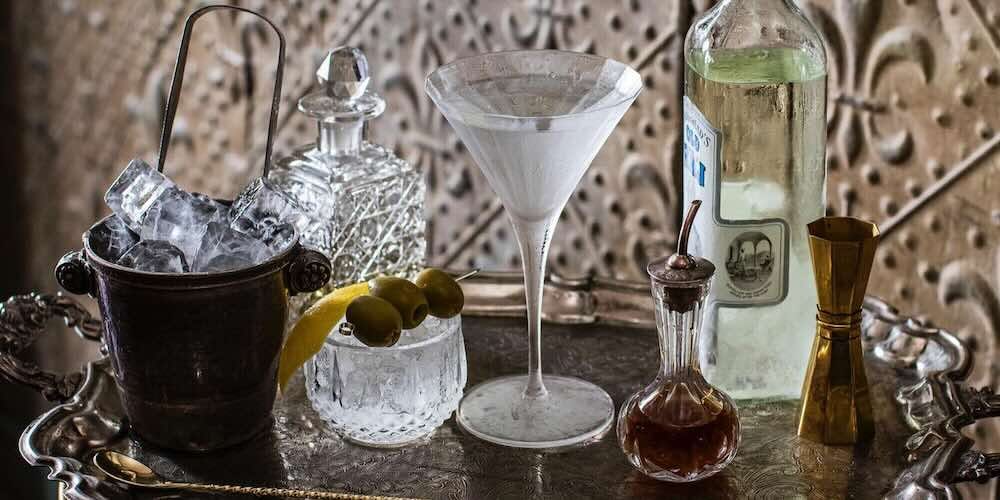
The 10 Most Important Cocktails of the 21st Century
From the Negroni to the Martini to the Oaxaca Old Fashioned, cocktail writer Robert Simonson highlights the 10 most important cocktails of this century. Do you agree? What do you think is missing — or maybe shouldn’t be on this list?
10 Iconic Foods Invented in Chicago
Hot dogs dragged through the garden, deep dish, and Italian beef for sure, but did you know brownies were created in Chicago? Bertha Palmer, the grande dame of the Palmer House, asked the hotel’s pastry chef to make something sweet for the 1893 World’s Fair that was like a cake, but smaller and more portable. Hence, the brownie. Writer Lisa Shames chronicles 10 foods, like chicken vesuvio and the jibarito, that were invented in Chicago. It’s a tasty list.
Local Leaf Farm sprouting delicious microgreens
Who doesn’t like a microgreen that packs a serious punch of flavor and nutrients in a tiny bite? My friend Todd Katz and his partners at Local Leaf Farm recently opened a storefront in my hometown to sell this wondrous produce as well as lettuces and edible flowers. You can buy them at the store or online (for local pickup) and they also sell directly to restaurants (so chefs: Call them!). My old friend, Amy Lee Kite, wrote a lovely piece about them in her Substack.
I can almost taste the sparkling rose now after reading your beautifully-descriptive piece. Thanks for sharing!
They're obviously great but as a Sonoma local I find it deeply hilarious to hear Scribe describe themselves as approachable